Lvxin Auto Parts (Anji) Co., Ltd

How to Choose the Right Ratchet Tie Down Strap for a Flatbed Trailer
When transporting cargo on a flatbed trailer, choosing the right ratchet tie down strap is essential for load security, transportation safety, and compliance with cargo control requirements. A high-quality ratchet strap helps prevent cargo movement during braking, turning, and long-distance hauling.
With different strap widths, working load limits, hooks, and materials available, selecting the correct tie down strap depends on the cargo type, trailer application, and transportation conditions.
This guide explains how to choose the right ratchet tie down strap for a flatbed trailer.
1. Understand Ratchet Tie Down Strap Working Load Limit (WLL)
The most important factor when selecting a ratchet strap is the Working Load Limit (WLL).
The Working Load Limit refers to the maximum weight a strap assembly can safely secure under normal transportation conditions. A strap with a higher WLL provides greater cargo security and is suitable for heavier loads.
Common flatbed trailer ratchet strap ratings include:
- 2 inch ratchet straps: commonly used for medium-duty cargo securing
- 3 inch ratchet straps: widely used for flatbed trailers and commercial transportation
- 4 inch ratchet straps: designed for heavy-duty loads and oversized cargo
For professional flatbed operations, 4 inch ratchet straps are often preferred for securing steel, machinery, lumber, pipes, and other heavy materials.
Always select a strap with a WLL suitable for the cargo weight and follow applicable cargo securement regulations.
2. Choose the Correct Strap Width and Length
The strap width directly affects strength and durability.
2 Inch Ratchet Tie Down Straps
2 inch straps are suitable for:
- Small equipment
- Landscaping materials
- Light commercial cargo
- Utility trailers
3 Inch and 4 Inch Ratchet Straps
Heavy-duty flatbed trailers typically use wider straps because they provide:
- Higher breaking strength
- Better load distribution
- Improved resistance to abrasion
- Longer service life
The strap length should also match the cargo size. A strap that is too short cannot properly secure the load, while an excessively long strap may create unnecessary loose webbing.
3. Select the Right Strap Material
Most professional ratchet straps are manufactured using high-strength polyester webbing.
Polyester webbing is preferred for flatbed trailers because it offers:
- Excellent abrasion resistance
- Low stretch compared with other materials
- Resistance to moisture and UV exposure
- Reliable performance in outdoor environments
For long-distance trucking and heavy-duty applications, durable polyester webbing provides better stability and safety.
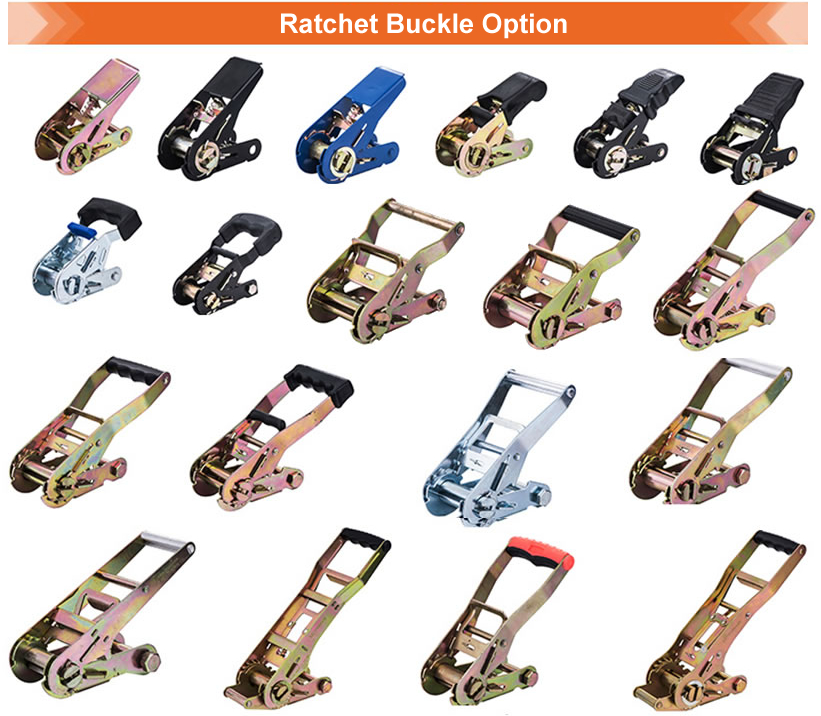
4. Choose the Proper Ratchet Buckle Design
The ratchet buckle is the core component that creates tension and secures the cargo.
Common ratchet buckle options include:
Standard Ratchet Buckle
Suitable for general cargo applications with reliable tension control.
Wide Handle Ratchet Buckle
Provides better grip and easier operation, especially when wearing work gloves.
Heavy Duty Ratchet Buckle
Designed for commercial flatbed transportation where higher tension capacity is required.
A strong ratchet mechanism improves efficiency and reduces the risk of strap loosening during transportation.
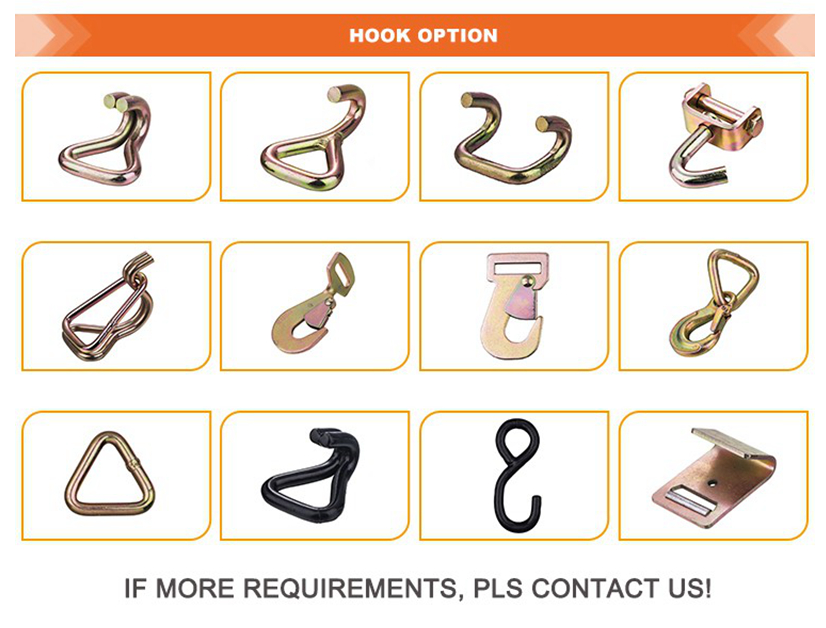
5. Select the Correct End Fittings and Hooks
The hook style should match the trailer attachment points and cargo requirements.
Common options include:
Flat Hooks
Flat hooks are widely used on flatbed trailers because they fit securely into trailer rails and anchor points.
Wire Hooks
Wire hooks provide flexible attachment options and are commonly used for general cargo securing.
Chain Extensions
Chain end fittings are suitable for heavy-duty applications where additional strength and durability are needed.
Choosing the correct hook prevents connection failure and improves overall cargo security.
6. Consider Cargo Type and Application
Different cargo requires different tie down solutions.
Lumber and Building Materials
Recommended:
- Heavy-duty polyester straps
- Wide ratchet assemblies
- Abrasion-resistant webbing
Machinery and Industrial Equipment
Recommended:
- High working load limit straps
- Heavy-duty ratchet buckles
- Chain or reinforced end fittings
Steel Products and Pipes
Recommended:
- 4 inch ratchet straps
- Protective edge guards
- High-strength webbing
Selecting the correct strap based on cargo characteristics helps prevent shifting and damage.
7. Check Strap Quality and Manufacturing Standards
A professional-grade ratchet tie down strap should have:
- Clear working load limit markings
- Strong stitching patterns
- Durable webbing construction
- Corrosion-resistant hardware
- Reliable buckle performance
For distributors, importers, and fleet operators, consistent product quality is important to reduce replacement costs and improve customer satisfaction.
Frequently Asked Questions About Ratchet Tie Down Straps
What size ratchet strap is best for a flatbed trailer?
For most commercial flatbed trailers, 3 inch and 4 inch ratchet straps are commonly used because they provide higher strength and better load control compared with smaller straps.
How many ratchet straps are needed to secure cargo?
The number of straps depends on cargo weight, size, length, and transportation regulations. Heavy or long cargo usually requires additional tie downs to prevent movement.
Are polyester ratchet straps better than nylon straps?
For flatbed trailer applications, polyester straps are generally preferred because they stretch less, maintain tension better, and perform well in outdoor conditions.
How long do ratchet tie down straps last?
The service life depends on usage, storage conditions, and exposure to weather. Regular inspection is recommended, and damaged straps should be replaced immediately.
Conclusion
Choosing the right ratchet tie down strap for a flatbed trailer requires careful consideration of working load limit, strap width, material, buckle design, hook type, and cargo application.
For professional trucking companies, trailer dealers, distributors, and cargo equipment suppliers, investing in high-quality ratchet straps improves transportation safety, reduces cargo damage, and ensures reliable performance in demanding environments.